
How to Search Multnomah County Traffic Court Records
Start by reading the citation for the court name. A state violation filed in the Circuit Court appears in the Oregon Judicial Department web portal. A city citation may go to a municipal court, such as Portland or Gresham, with its own system. Once you know the court, you search by citation number or by name.
The portal search works the same as any case search. Use the citation or case number if you have it, or a defendant name with a date of birth to narrow common names.
- Read the citation to find the court name.
- Open the Oregon Judicial Department portal for a Circuit Court case.
- Search by citation number, case number, or defendant name.
- Open the case to read the charge, fine, and court dates.
- For a city citation, use the named municipal court's system instead.
For the general portal walkthrough, the court records page covers the search step by step.
Which Courts Handle Traffic Cases in Multnomah County
Traffic cases do not all go to one court. State traffic crimes and violations filed in the county appear in the Multnomah County Circuit Court. City parking, local-code, and some municipal traffic matters go to a city municipal court. The issuing agency and the type of violation decide where a citation lands.
The Sheriff's Office also runs a civil case status search for civil process, which is separate from traffic citations.
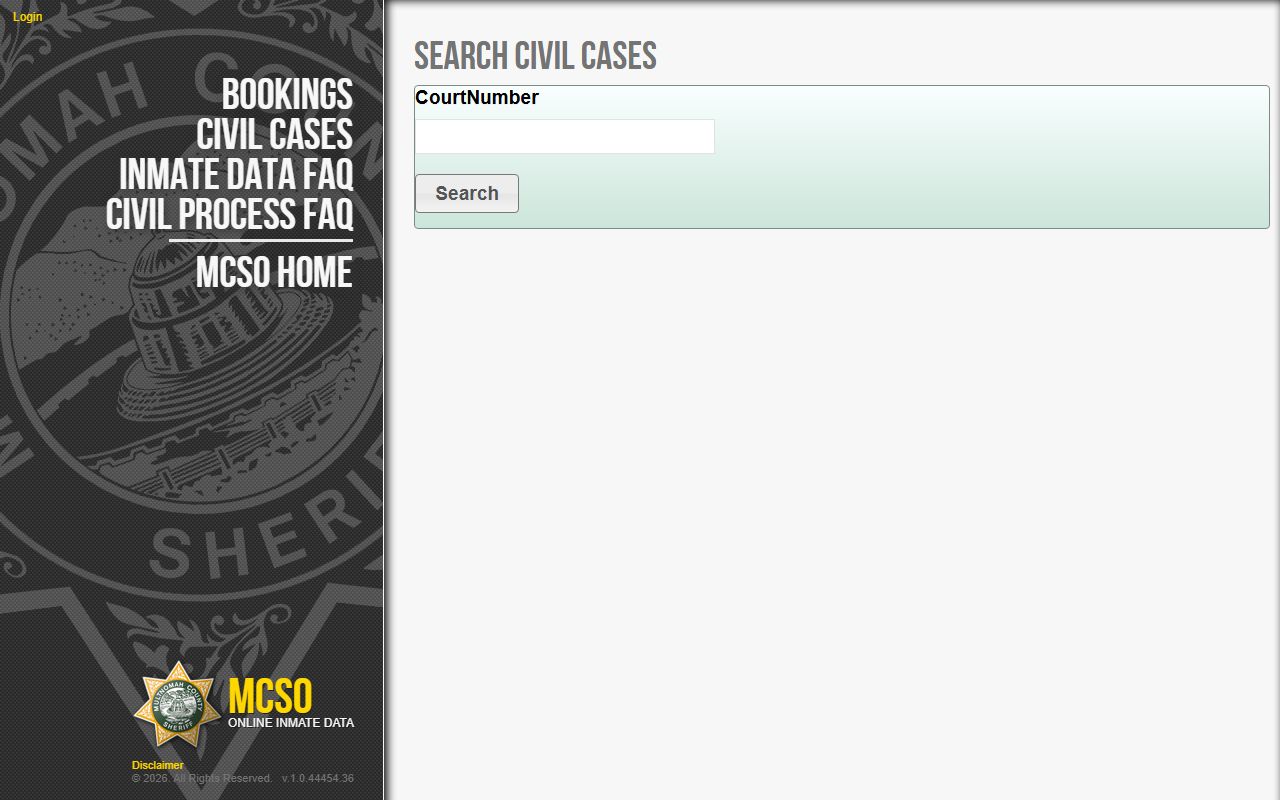
The MCSO civil case status search handles civil process status, while traffic citations route through the court portals. Reading the citation tells you which path applies.
Types of Traffic Cases on Record
Traffic records cover a range of cases. Most are violations, which are non-criminal and resolved with a fine. Some are crimes, such as driving while suspended in certain cases or reckless driving. The most serious is DUII, which is a criminal matter, not a simple violation.
- Speeding and other moving violations.
- Equipment, registration, and insurance violations.
- Driving while suspended or revoked.
- Reckless or dangerous driving.
- DUII, which routes to criminal court.
The case type shapes how the record reads and where it appears. A violation stays a traffic matter, while a crime can show up in criminal court records too.
What Multnomah County Traffic Court Records Show
A traffic court record holds the case history for a citation. It shows the charge, the court dates, any plea, and the outcome. The table lists the fields you will read in a traffic case record.
| Field | What It Shows |
|---|---|
| Citation / Case Number | The ticket number or the court case number. |
| Charge / Violation | The traffic offense charged. |
| Court Dates | Arraignment, trial, or hearing dates. |
| Plea | How the driver responded to the charge. |
| Judgment / Fine | The outcome and any fine imposed. |
| Diversion / Class | Traffic school or diversion if ordered. |
| FTA / FTP Events | Failure to appear or failure to pay entries. |
Note: a court traffic record is not the same as the DMV driver record, which is covered below.
Searching by Citation Number vs by Name
You can search two ways, and each has a use. A citation number search is exact and fast when you have the ticket in hand. A name search helps when you do not have the citation, though common names can return many results. The table lists the fields a traffic search uses.
| Field | Type | Required | Notes |
|---|---|---|---|
| Citation number | Text | No | Use if printed on the ticket. |
| Case number | Text | No | Court case number if assigned. |
| Defendant last name | Text | No | Used with first name and date of birth. |
| Defendant first name | Text | No | Optional narrowing field. |
| Date of birth | Date | No | Helps distinguish common names. |
| Court location | Filter | No | Circuit Court or municipal court. |
Paying or Contesting a Multnomah County Traffic Ticket
You have a choice when you get a ticket. You can pay it, which may count as a plea or admission, or you can contest it by the deadline on the citation. Read the citation closely, since it lists the court, the deadline, and the options. The steps below cover both paths.
- Read the citation for the court name and deadline.
- Search the named court's portal by citation number or name.
- To pay, follow the court's payment system; payment may be a plea.
- To contest, enter the required plea or request before the deadline.
- Appear at the hearing or request a reschedule under the court's rules.
- Check your DMV record separately if license status is involved.
Missing the deadline can trigger a failure-to-appear or failure-to-pay consequence, so act before the date on the ticket.
Public Access Laws for Traffic Court Records
Traffic court records follow the same public-access framework as other court records. Most are open, but some are limited. The way a traffic charge starts can matter too. A criminal citation in lieu of custody is governed by ORS 133.055, which still creates a record even without an arrest.
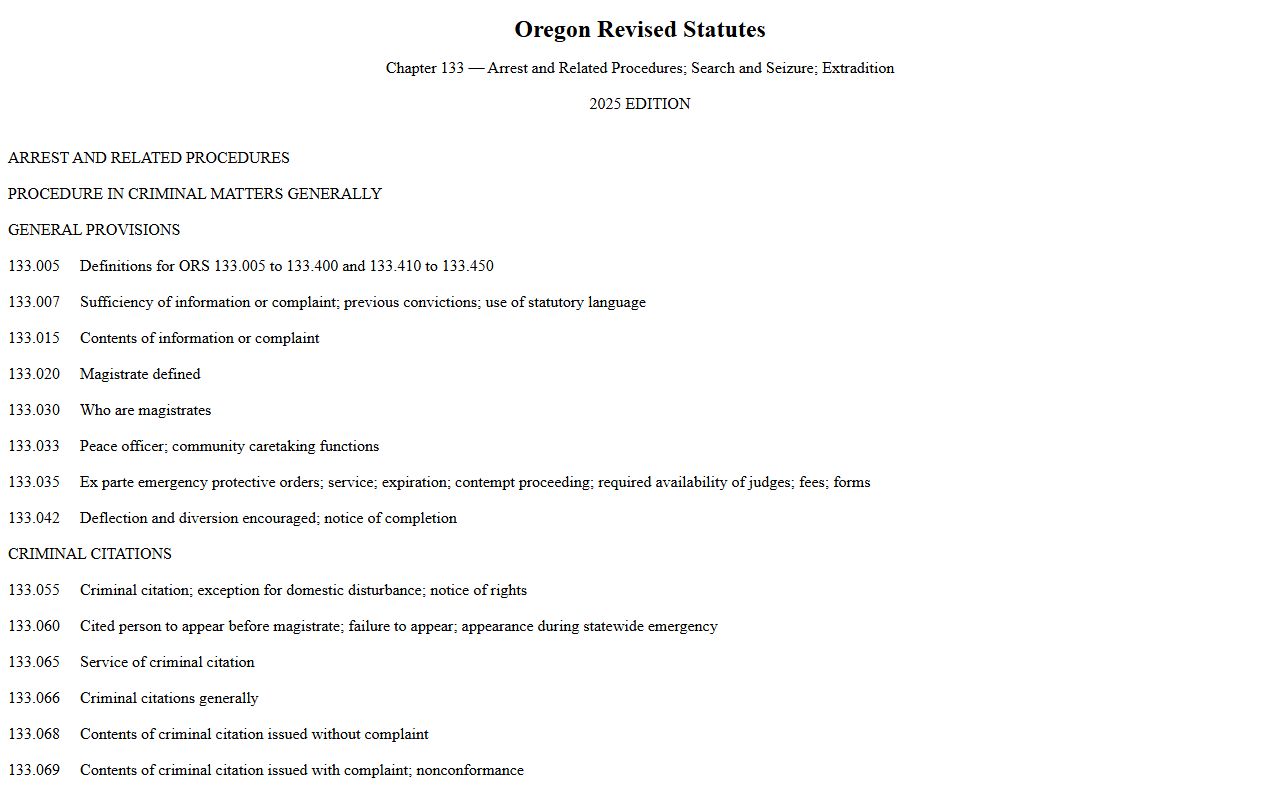
The ORS Chapter 133 page covers criminal citation and arrest-process provisions. Release conditions for more serious traffic crimes tie to ORS 135.230.
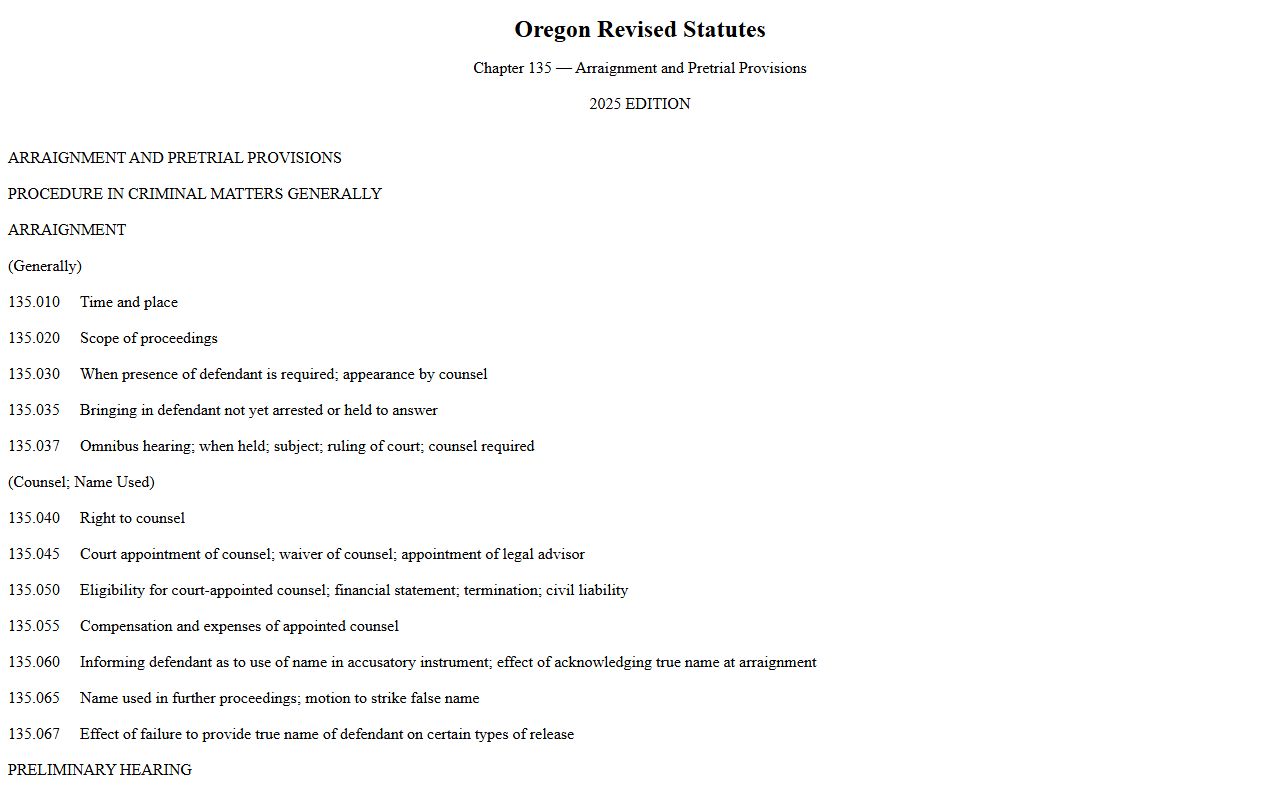
The ORS Chapter 135 page sets out release agreement and security release definitions that can apply when a traffic charge is criminal.
Court Traffic Records vs State Driver Records
This is the distinction that trips up the most people. The court traffic record is the case file. The state DMV driver record is a separate document that tracks your license status and reported convictions. They are not the same, and they live in different places.
| Point | Court Traffic Record | State Driver Record |
|---|---|---|
| Source | The court that heard the case | The Oregon DMV |
| What it shows | Citation, charge, court dates, plea, fine | License status, reported convictions, suspensions |
| Where to access | Court portal or copy request | Oregon DMV records order |
| Used for | Case detail and proof | Licensing, insurance, and employer checks |
Order a driver record from the DMV when license status, points-style reporting, or reinstatement is the issue.
The Oregon DMV records page handles driver-record orders, which are separate from the court traffic case file.
CDL and Commercial Driver Records
Commercial drivers face stricter rules. A traffic conviction can carry heavier consequences for a commercial driver's license, even for an offense in a personal vehicle. Federal and state rules limit how a CDL holder can use diversion or traffic school to hide a conviction.
If you hold a CDL, both the court record and the DMV driver record matter. The court record shows the case, while the DMV record shows the license impact. Check both, and consider legal advice before resolving a ticket that could affect a commercial license.
DUII and DWI Cases
DUII is not a simple traffic ticket. In Oregon, impaired driving is a criminal matter that can involve the Circuit Court, license consequences through the DMV, treatment, probation, and even a jail booking. So a DUII leaves more than a traffic record.
Because DUII is criminal, the case appears in criminal court records, and an arrest creates a booking record. The arrest records page covers booking and charge data, and the court records page covers the criminal case file.
Diversion and Defensive Driving
Some drivers can avoid a conviction on the record. A traffic school or defensive driving option may be offered for an eligible violation, and a deferral or diversion can keep a conviction off the record if the driver meets the terms. The options depend on the court, the violation, and the driver's history.
These programs are not automatic. You usually must request the option, meet eligibility rules, and complete the requirement by a deadline. A commercial driver faces tighter limits, so the same option may not apply to a CDL holder.
Sealing or Expunging Traffic Records
Access limits apply to some traffic records. Juvenile traffic matters, sealed criminal traffic cases, diversion records, and set-aside eligible criminal traffic charges can have limited public access. Oregon uses "set aside" for clearing eligible criminal records under ORS 137.225.
A simple traffic violation is usually not eligible for a set-aside in the way a crime is, but a criminal traffic charge may be. The arrest records page explains set-aside relief in plain terms, which applies to criminal traffic charges like DUII when eligibility is met.
Fees for Traffic Record Copies
Copies of a traffic court record follow the court's standard fee schedule. A DMV driver record carries its own separate fee, set by the DMV. The table lists the court copy fees.
| Item | Fee |
|---|---|
| Regular electronic copy, emailed | $3.00 per request |
| Regular printed copy | $3.00 per request plus $0.25 per page |
| Certified copy | $5.00 per document plus copy charges |
Note: the fine on a traffic citation is separate from the copy fee; the fine is set by the court that hears the case.