
The U.S. District Court for the District of Oregon
Multnomah County sits in the U.S. District Court for the District of Oregon. The federal courthouse in Portland is the Mark O. Hatfield U.S. Courthouse at 1000 SW Third Avenue. This court handles federal matters for the county, which are separate from the cases the Circuit Court hears. The federal court runs its own clerk's office, its own records system, and its own rules. It is part of the federal judiciary, not the Oregon court system, so its records never cross into the county or state databases.
The District of Oregon is the trial court for federal cases in the state. It is where a federal case begins, much as the Circuit Court is where a state case begins. The two systems do not share records, so a federal case will not appear in the state court portal. This trips up many searchers. If you look for a federal indictment in the Oregon Judicial Department portal, you will find nothing, because the case lives in the federal system. The reverse is also true, since a state traffic case will never show up in PACER.
U.S. District Court, District of Oregon
Mark O. Hatfield U.S. Courthouse
1000 SW Third Avenue
Portland, OR 97204
What Federal Cases Cover
Federal court hears a defined set of cases. These include federal crimes, civil-rights litigation, federal-question civil cases, diversity cases between parties from different states, federal habeas corpus, prisoner civil rights, and disputes with federal agencies. Bankruptcy is also federal, handled by a separate bankruptcy court within the same district.
State matters stay in state court. A state crime, a divorce, a probate case, and an ordinary state-law civil suit remain in the Circuit Court. A case lands in federal court only when federal jurisdiction clearly exists. For the state side, the court records page covers the Circuit Court search.
Some cases could go either way, which is where jurisdiction matters. A civil dispute between residents of two different states can land in federal court under diversity jurisdiction if the amount is high enough. A claim under a federal law, such as a civil-rights statute, raises a federal question. Most everyday legal matters, though, stay in the state Circuit Court.
Searching Federal Records with PACER
PACER is the official federal electronic records system. It covers district, bankruptcy, and appellate courts across the country, including the District of Oregon. Registration is required, and fees may apply, though users can qualify for fee waivers or quarterly fee exemptions. PACER is the authoritative source for federal case records.
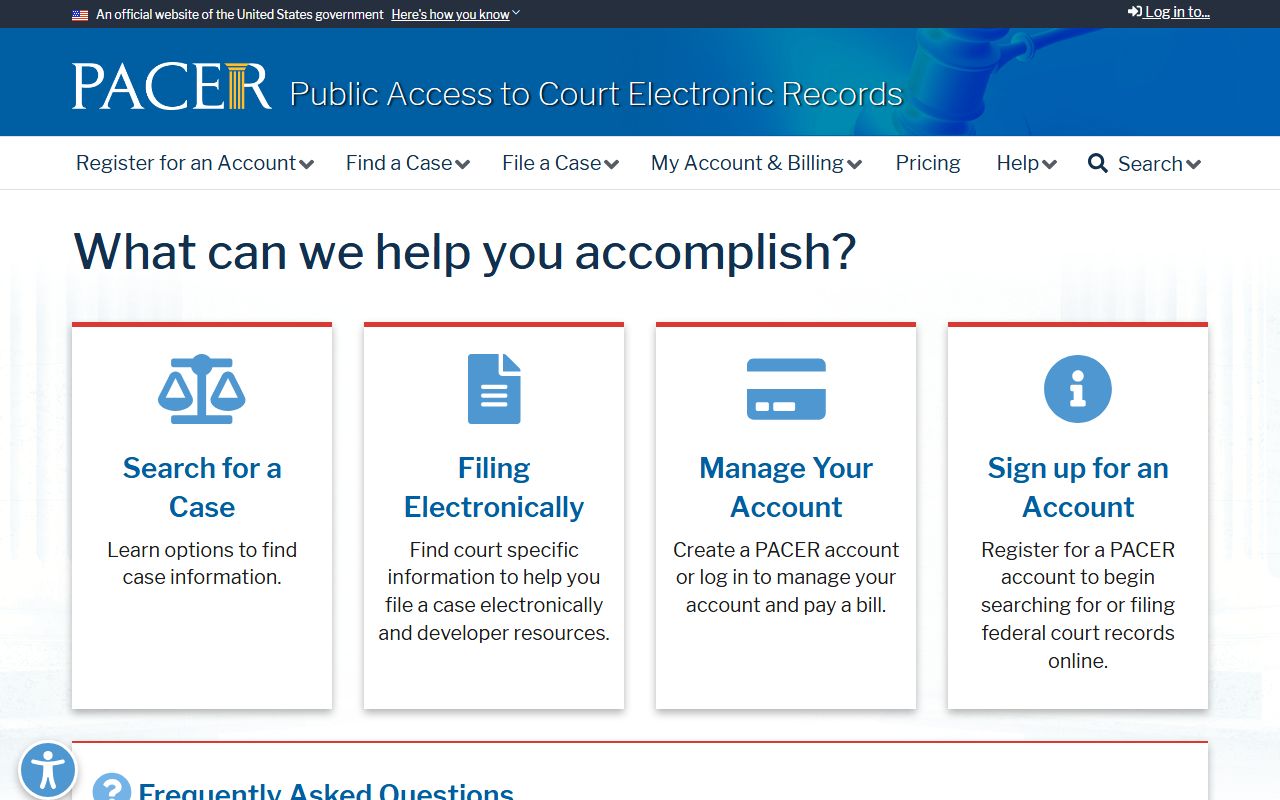
Register and search through PACER. A free nonofficial site, CourtListener, hosts some opinions and documents, but official filings remain on PACER and CM/ECF.
PACER charges per page to view documents, with a cap on most single documents and a quarterly threshold below which fees are waived. For occasional users, the cost is usually small. Heavy users, such as attorneys and researchers, set up accounts and budget for the fees. Either way, PACER is the system courts and lawyers treat as authoritative.
CM/ECF Electronic Filing and Records
CM/ECF is the federal courts' case management and electronic filing system. Attorneys file documents through it, and the public reaches those filings through PACER. For the District of Oregon, CM/ECF is the system behind the case records you search.
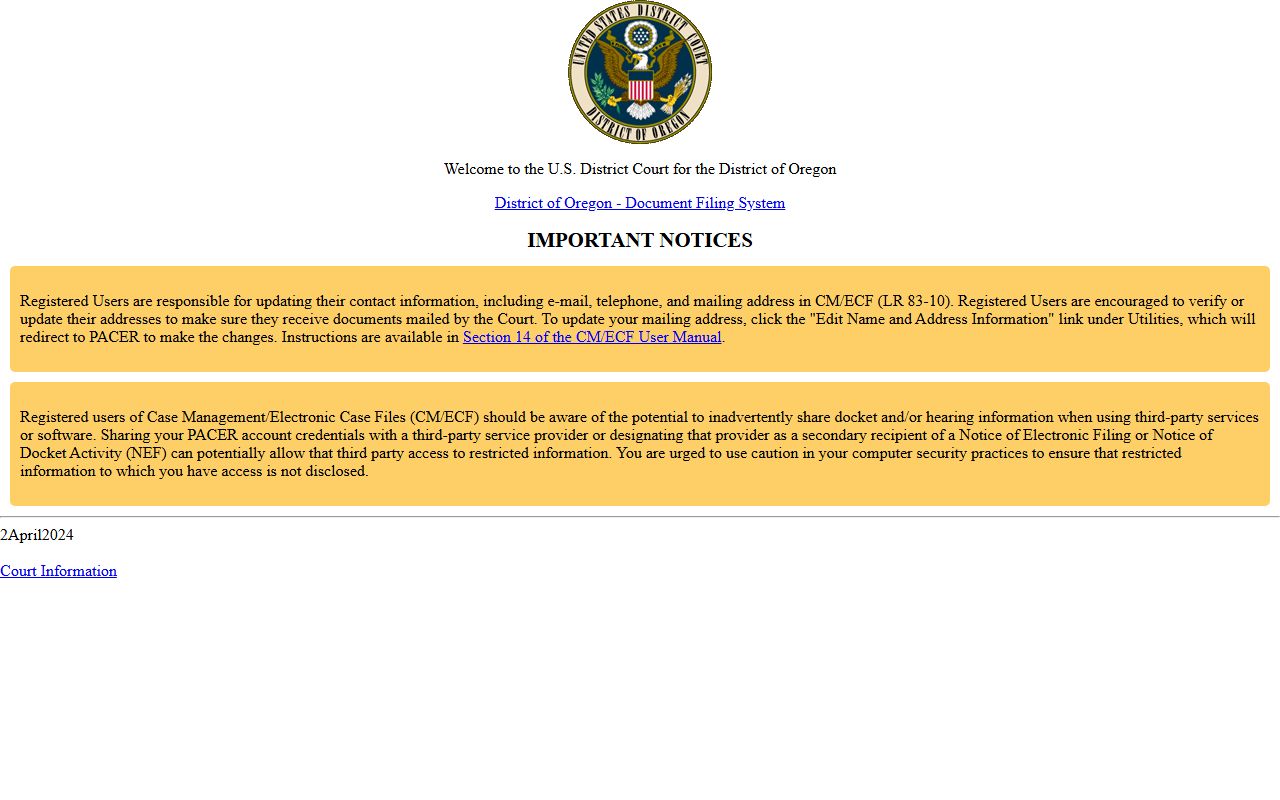
The District of Oregon CM/ECF system is where federal filings live. Most public users reach those records through PACER rather than filing directly.
The split between filing and viewing is worth understanding. Attorneys with CM/ECF accounts file and receive documents through the system. The general public does not file there; instead, the public views the same docket and documents through PACER. So CM/ECF and PACER are two doors into the same federal case data.
Federal Bankruptcy Court
Bankruptcy is federal, not a county matter. People and businesses in Multnomah County file bankruptcy in the U.S. Bankruptcy Court for the District of Oregon. So a bankruptcy record is never in the Circuit Court or the county system; it is a federal file.
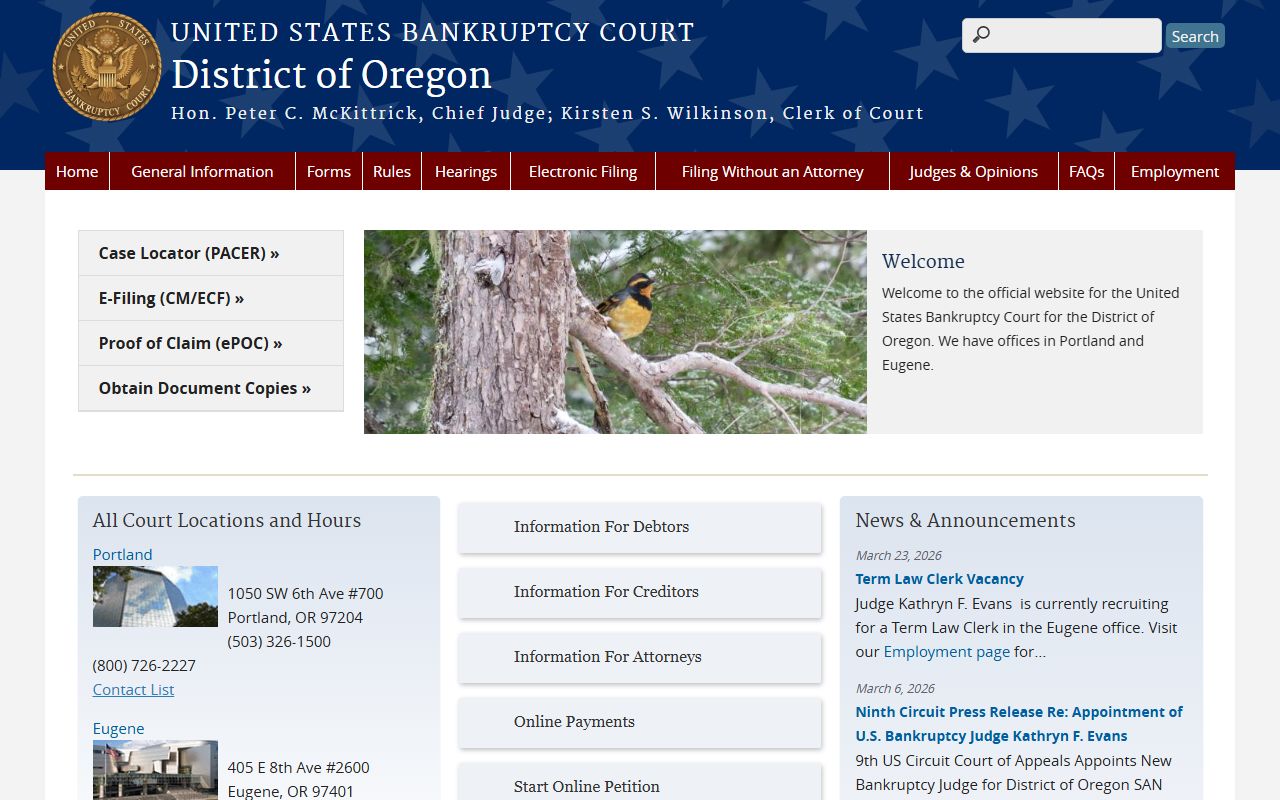
The U.S. Bankruptcy Court for Oregon handles these cases, and the records are available through PACER like other federal files.
Bankruptcy records draw a lot of searches, because creditors, employers, and the public can check whether a person or business has filed. The federal court keeps these files, and the bankruptcy docket shows the chapter filed, the trustee, the creditors, and the case status. None of that appears in the county or state systems.
Appeals to the Ninth Circuit
Federal appeals follow their own ladder. An appeal from the District of Oregon goes to the U.S. Court of Appeals for the Ninth Circuit, which covers Oregon and much of the western United States. This is the federal counterpart to the Oregon Court of Appeals on the state side.
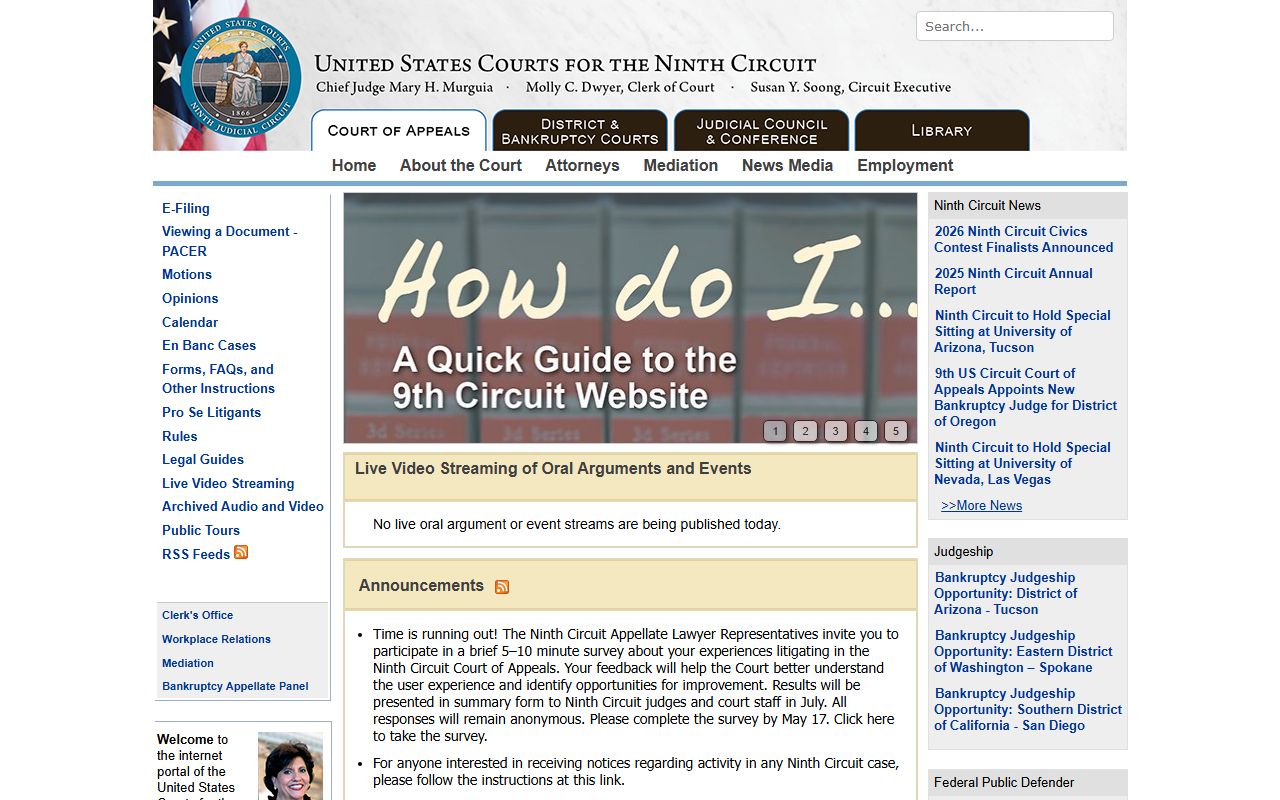
The Ninth Circuit hears appeals from the District of Oregon. Its records are also available through PACER for the appellate level.
The Ninth Circuit is one of the largest federal appeals courts in the country. An appeal there reviews the district court record for legal error rather than holding a new trial. A further appeal would go to the U.S. Supreme Court, which hears only a small number of cases each year. Most federal cases end at the district or circuit level.
The U.S. Attorney and U.S. Marshals
Two federal offices play key roles in criminal cases. The U.S. Attorney's Office for the District of Oregon prosecutes federal crimes in the state, much as the District Attorney prosecutes state crimes. The U.S. Marshals Service handles federal custody, transport, and warrants.
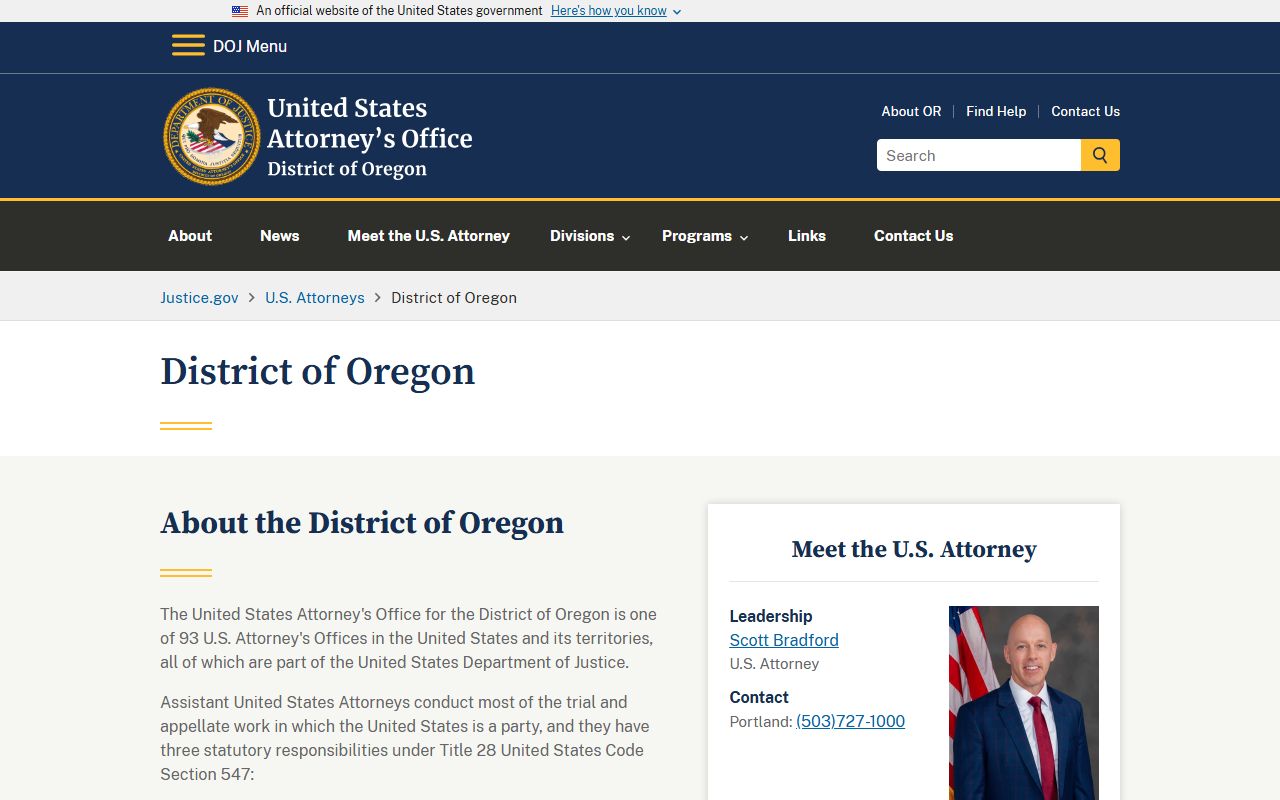
The U.S. Attorney for Oregon leads federal prosecutions. The U.S. Marshals Service, District of Oregon, supports the federal courts and handles federal custody.
These offices mirror the state structure. The U.S. Attorney is the federal prosecutor, the way the District Attorney is the state prosecutor. The Marshals handle federal warrants, transport, and security, the way the Sheriff handles county custody. A federal criminal case can therefore generate records across the court, the prosecutor, and the Marshals, plus the Bureau of Prisons if there is a conviction.
Federal Inmates and Custody
Federal custody is separate from the county jail and state prison. A person convicted of a federal crime is held by the Bureau of Prisons, not the county Sheriff. The BOP runs its own inmate locator, which covers federal inmates from 1982 to the present.
So to find a federal inmate, you use the BOP locator, not the county jail tool. The released inmates page covers the BOP locator and how to search it, along with the state and county tools.
The three custody systems do not overlap. The county Sheriff holds people in the local jail before and during a case. The state holds sentenced felons in prison. The federal Bureau of Prisons holds people convicted of federal crimes. A single person could pass through more than one over time, which is why a full custody search may touch all three locators.
Federal vs State Court Records
The two systems are easy to mix up, but they never share records. Knowing which one holds a case tells you which tool to use. The table compares the two so you can search in the right place.
| Point | Federal Court | State Court |
|---|---|---|
| Handles | Federal crimes, civil rights, bankruptcy | State crimes, family, probate, traffic |
| Trial court | U.S. District Court for Oregon | Multnomah County Circuit Court |
| Records through | PACER and CM/ECF | Oregon Judicial Department portal |
| Appeals to | Ninth Circuit | Oregon Court of Appeals |
When a case is federal, the state portal returns nothing, so go straight to PACER. When a case is a state matter, PACER will not have it. A quick way to tell them apart is the case caption and number style, since federal cases use a different numbering format and often name the United States as a party in a criminal matter.