
Legal Help in Multnomah County
Getting legal help starts with the right match. A criminal defendant who cannot afford a lawyer may qualify for appointed counsel. A low-income person with a civil problem may qualify for legal aid. Someone handling a case alone can get forms and procedural help from the court. Each path has its own door, and using the wrong one wastes time and can cost a missed deadline.
One rule cuts across all of them. Court staff and resource-center staff can provide forms and explain procedure, but they cannot give legal advice, choose your forms, or predict an outcome. For advice tailored to your case, you need a lawyer, whether private, appointed, or through legal aid.
The biggest split is criminal versus civil. Criminal defendants who cannot afford counsel may get an appointed public defender. Civil problems, such as eviction or a family-safety matter, are not covered by public defense, but legal-aid groups may help if you qualify by income. The table sorts the two paths.
| Point | Public Defense | Civil Legal Aid |
|---|---|---|
| Covers | Criminal charges | Civil matters like housing and family safety |
| Who provides it | Appointed counsel through the court | Legal Aid Services of Oregon and the Oregon Law Center |
| How to get it | Ask the court for appointed counsel | Apply through a legal-aid provider |
| Eligibility | Income and case type screening | Income and case type screening |
The Legal Resource Center
The Multnomah County Circuit Court runs a Legal Resource Center for self-represented litigants. It offers forms and procedural information for a wide range of common case types, from family law to small claims. The center is a sensible first stop for anyone handling a case without a lawyer in the county.
The center has limits worth knowing. Staff cannot tell you what to write, predict how a judge will rule, or recommend a specific attorney. They point you to the right forms and explain the steps. Statewide forms for family, civil, probate, small claims, landlord-tenant, protective orders, and fee waivers are also available through the Oregon Judicial Department forms library.
The center is located in the Central Courthouse, on the second floor, so many people stop there on the same trip as a filing or a hearing. It is a good idea to gather your case details and any deadlines before you go, since the staff can move faster when you arrive prepared. The center cannot fill out the forms for you, but it can show you which form fits a common situation.
Lawyer Referral Service
If you want to hire a private attorney, a referral service helps you find one. The Oregon State Bar runs a Lawyer Referral Service that connects people with attorneys by practice area. It is a reliable way to reach a vetted lawyer for a consultation.
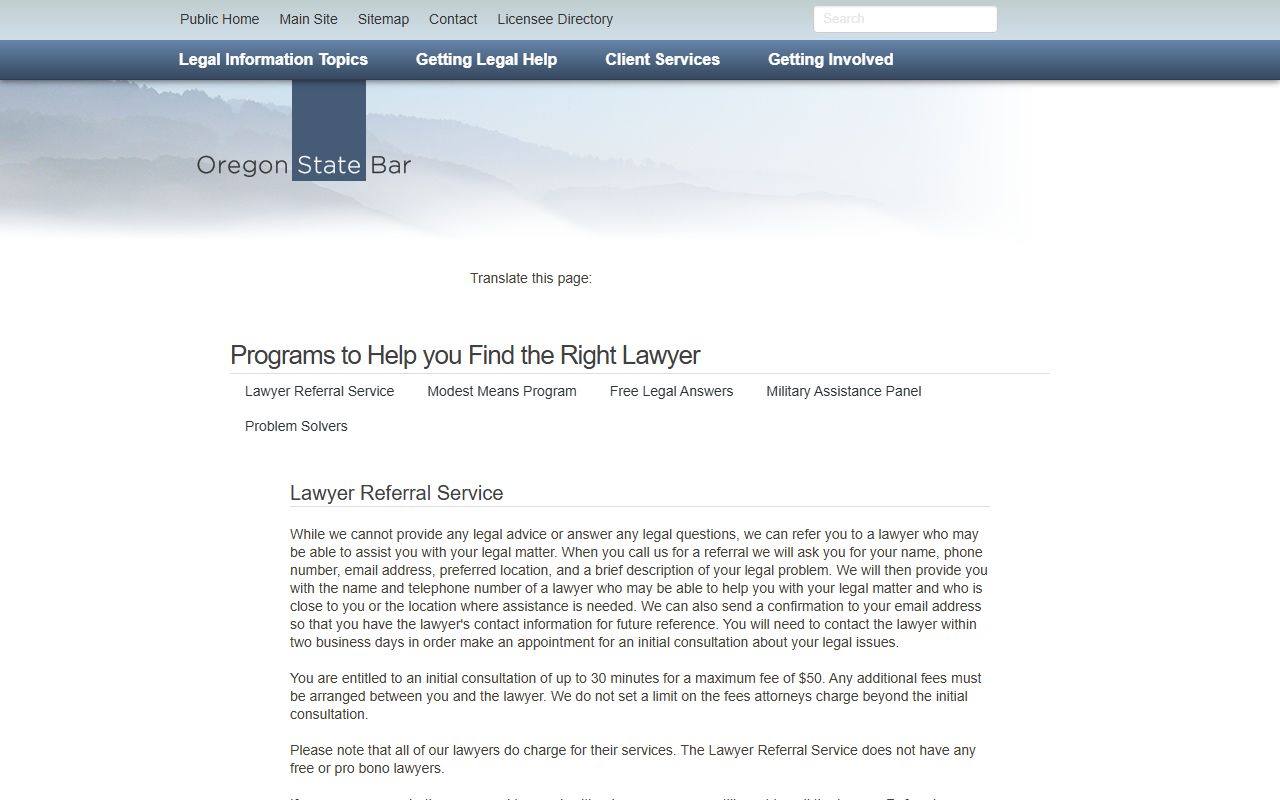
The Oregon State Bar Lawyer Referral Service matches you with a private attorney. A short paid consultation often follows, which can be money well spent before a big decision.
The Multnomah Bar Association also offers local legal-community resources and referral-style help. A referral is not the same as free representation, but it gets you in front of a qualified lawyer who can size up the problem. For many people, one consultation is enough to decide whether to hire counsel or handle a matter on their own.
Oregon Law Help and Legal Aid
Low-income residents have civil legal-aid options. Oregon Law Help is a public legal-information site with guides and referrals. Legal Aid Services of Oregon and the Oregon Law Center provide civil legal assistance to people who qualify. These groups focus on civil matters like housing, family safety, and public benefits, not criminal defense, which goes through public defense instead.

Start at Oregon Law Help for plain-language guides and referrals to legal-aid providers. Eligibility usually depends on income and the type of case.
Legal aid is in high demand, so it helps to apply early and have your documents ready. These programs often prioritize urgent matters, such as an eviction with a court date or a safety issue. Even when a group cannot take your case, it may point you to a clinic, a self-help packet, or another provider. Oregon Law Help is the easiest single starting point for sorting out where to turn.
Public Defense for Criminal Cases
A person charged with a crime who cannot afford a lawyer can ask the court for appointed counsel. Public defense in Oregon is organized through Oregon Public Defense Services and delivered locally by providers and court-appointed attorneys. Metropolitan Public Defender is a major nonprofit provider serving Multnomah County.
The court screens for eligibility based on income and the case type. Oregon has had widely reported public-defense capacity issues, so timelines can vary by court and case. The arrest records page covers the criminal side, and the warrant records page explains why an attorney matters when a warrant is involved.
Asking for appointed counsel is straightforward. At an early hearing, you tell the court you cannot afford a lawyer, and the court reviews your finances. If you qualify, the court appoints a defender. Do not skip the hearing because you lack a lawyer; appearing and asking for counsel is the right move, and missing court can add a warrant to your case.
Victim Services and Rights
Victims have their own support system. The District Attorney's office offers victim assistance, and the Oregon Department of Justice runs Crime Victim and Survivor Services. Victims can also register for custody notifications through VISOR and the VINE network, and the court can issue no-contact and protective orders.
These services help a victim follow a case and stay safe. For custody alerts and release information, the released inmates page covers VISOR and the offender locators in detail.
Victim rights run through the whole case. A victim can seek compensation through the state crime victims compensation program, ask about restitution, and stay informed about hearings and release. The District Attorney's victim assistance staff are a key contact, since they connect victims to services as a case moves through the court.
Common Pro Se Needs
Many people handle a case without a lawyer, especially in family and civil matters. The court's forms and the resource center cover the most common needs. The list below shows the matters self-represented people handle most often.
- Divorce, custody, and parenting time.
- Child support changes.
- Restraining and protective orders.
- Small claims and eviction answers.
- Fee waivers, name changes, and simple-estate affidavits.
For these, the statewide forms library and the resource center are the right starting points. A consultation through the referral service can still help for a tricky issue.
Self-help works best for routine matters. An uncontested divorce, a small claim, or a simple name change can often be handled with the right forms and a little time. The harder the dispute, the more value a lawyer adds. If the other side has an attorney, or if children, property, or safety are at stake, getting your own counsel is worth serious thought.
Interpreters and Disability Access
The court provides language and disability access. Request an interpreter or an ADA accommodation through the court before your hearing date, not on the day of court, so the court has time to arrange it. Court materials list Oregon Relay 711 for telecommunications relay service, which helps people who are deaf or hard of hearing reach the court by phone.
Asking early is the key. An interpreter or accommodation request made well ahead of a hearing is far more likely to be ready when you need it. The court's accommodation process is the official route for these requests.
Language access is a right, not a favor. Oregon courts arrange interpreters so that a person who does not speak English can take part in a hearing. The same is true for disability accommodations, which the court provides under its access policy. Make the request through the court as early as you can, and confirm it before your court date.